
Innovations in the Public Interest
Technology & Democracy Initiative
We develop research and policy solutions that increase transparency, accountability, and public participation in technology to protect democratic values.
JUMP TO:
Securing and Governing Online Platforms | AI and Openness
Securing and Governing Online Platforms

IGP’s Technology & Democracy Initiative convened a panel of scholars and researchers for a conversation about red teaming, a cornerstone of cybersecurity where ethical hackers simulate attacks to uncover vulnerabilities.

This summer, the IGP Technology & Democracy Initiative and Humane Intelligence jointly designed and co-facilitated an AI red teaming workshop at TrustCon 2025. – Tech Policy Press

IGP researcher and Columbia SIPA lecturer Jen Weedon, who researches best practices in red teaming AI systems, pointed out that where a red team sits in the organizational chart shapes its incentives. – Fortune

IGP researcher Jen Weedon writes: "The critical question isn't just 'What don't we know yet about how this AI might fail?' but also 'What do we already know, and that we're choosing not to address?'" – Tech Policy Press

Appearing in the published book Trust, Safety, and the Internet We Share: Multistakeholder Insights, this paper addresses a structural gap in trust & safety literature: while public and regulatory discourse on trust and safety has focused on rules, the product and engineering systems that translate those rules into practice have remained largely undocumented in peer-reviewed scholarship.

The initiative builds on SIPA’s tradition of incubating transformative public interest technology projects that address global policy challenges, while providing unique opportunities for students to engage with cutting-edge technology policy implementation.
AI and Openness

A warning has gone viral, writes IGP Carnegie Distinguished Fellow Audrey Tang. In early September, Jacob Coxon, a researcher who just resigned from Anthropic, said: “The people building AI earnestly believe that it could kill us all by the end of the decade."

As policymakers grapple with the future of open AI, defining “openness” has become more important than ever. This post highlights a new paper that provides a shared framework for understanding openness in foundation models and reflects several years of collaborative work led by Columbia IGP and its partners.

There is an urgent need for a more nuanced and informed understanding of openness in AI systems, says Professor Camille François. – Communications of the ACM
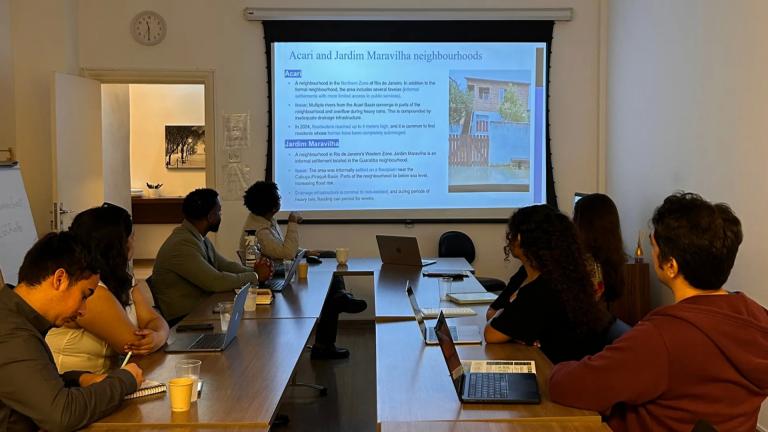
In March, a team of graduate students from Columbia University’s School of International and Public Affairs (SIPA) advised by Jen Weedon visited Columbia Global Center Rio de Janeiro as part of their capstone project developed in partnership with Fundação BRAVA.

Camille François, Professor of Practice at Columbia SIPA, and Mark Surman, president of Mozilla Foundation, examine generative AI’s potential to foster or stifle diverse artistic expression.

Columbia Convening on AI Openness and Safety explored the intersection of Open Source AI and Safety, convening over 45 experts and practitioners in AI to advance practical approaches to AI safety that embody the values of openness, transparency, community-centeredness and pragmatism.
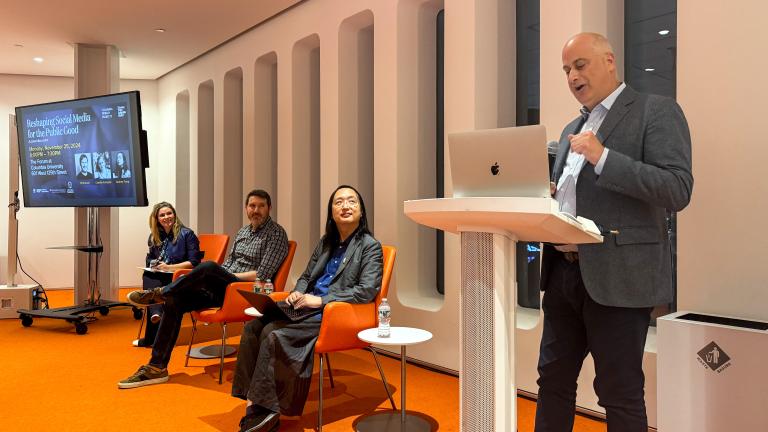
Taiwan’s former Minister of Digital Affairs Audrey Tang and New_Public co-founder Eli Pariser joined SIPA Associate Professor and IGP affiliated faculty member Camille François for a conversation about building healthier digital spaces.
On the official ”road to the French Government’s AI Action Summit,” Mozilla and Columbia University’s Institute of Global Politics are bringing together AI experts and practitioners to advance AI safety approaches that embody the values of open source.