
News and Event Highlights
News and Event Highlights
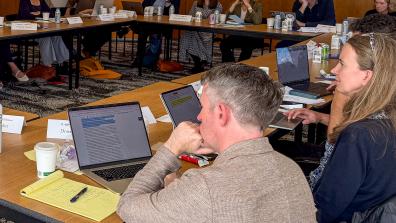
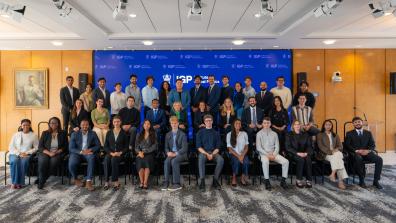
In October 2026, a group of 26 interdisciplinary social scientists, legal scholars, and policy experts from institutions across the United States and Europe gathered at Columbia’s School of International and Public Affairs (SIPA) for a workshop to discuss these questions.
The two-day event was convened by the American Democracy Initiative at Columbia’s Institute of Global Politics (IGP) and theConsortium on the American Political Economy (CAPE) with an ambitious goal in mind: to sketch out a research agenda for the next chapter of the study of the American political economy.
Participants did not present finished papers. Instead, each circulated a three-page memo in advance, making the case for an area that deserves more scholarly attention going forward. Participants then took stock of what has changed (e.g., the role of money in politics), what has not (bipartisan indifference to addressing it), and where research is most needed: the role of mega-wealthy individuals in our economy and democracy, international supply chains, how AI will affect democratic governance, whether the world will keep investing in American assets, and how a transformed administrative state will function, among other questions.
A central theme throughout the event was that the era of “business as usual” has come to an end. In talk after talk, participants doubted that the US would revert to the old normal and urged colleagues to revisit long-settled assumptions about how the American political economy works.
As Paul Pierson (UC Berkeley) put it reflecting on the historically large cuts to the safety net enacted under the second Trump Administration through the One Big Beautiful Bill Act: “As a person who made a living out of telling people it’s politically impossible to cut the welfare state, I’m beginning to think they may have finally cracked the code.”
Alexander Hertel-Fernandez, SIPA faculty lead for the American Democracy Initiative, explained that while this workshop was focused on identifying the need for new areas of academic research, much of the discussion had direct implications for policymakers in areas as diverse as financial regulation, labor, tax, and public infrastructure. “Before policymakers can make effective proposals, we need to establish a clearer picture of the changing economic and political context. That’s what this workshop aimed to do.”
CAPE is an international network of scholars committed to fostering the study of markets and politics in the United States in comparative and historical perspective, and supports this work through an annual summer academy for junior scholars, small grants, teaching resources, an annual conference, and workshops like this one.
The American Democracy Initiative supports research and policy development to strengthen democracy in the United States, including by understanding how economic policy shapes the resilience of democratic norms and institutions.
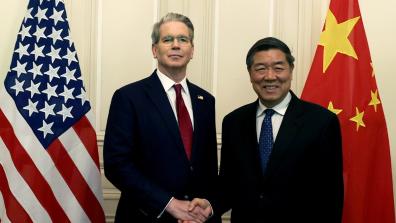
When it comes to the military applications of AI, the United States and China both perceive a salient tradeoff. On the one hand, they are locked in a broader strategic and geopolitical rivalry, of which fierce competition — or even an “arms race” — over AI is an integral component. Indeed, as Trump opined in the context of U.S.-Chinese relations, “whoever wins AI wins.” AI is a central component of China’s most recent five-year plan, which calls on the country to “seize the commanding heights of science and technology development.” AI provides potentially transformative military advantages, including improving intelligence collection and analysis, decision-support, targeting recommendations, command and control, autonomous maneuver and target acquisition, and even improving routine “back office” functions of military organizations. This is only underscored by recent demonstrations of AI tools on the battlefield in the conflicts in the Middle East and Ukraine.
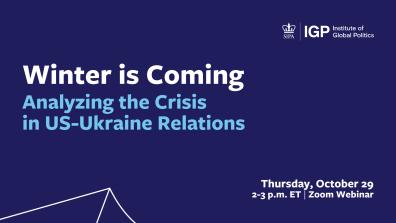
IGP hosted a webinar with a panel of experts and practitioners taking stock of US-Ukraine relations, situating recent developments in the broader war, and discussing Ukrainian defense technology and what the US can learn from it.
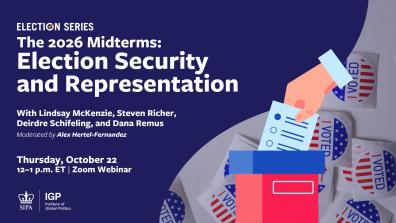
IGP hosted a webinar with political analysts discussing election integrity, political representation, and ballot access ahead of the 2026 midterm elections.
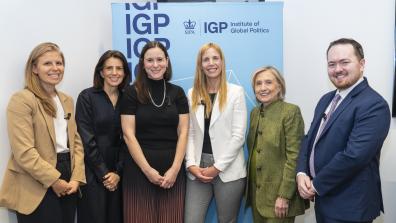
Tamar Mitts, Jessica Brandt, and Emerson Brooking discussed the changing technology behind influence operations in a panel discussion moderated by Erica Lonergan.
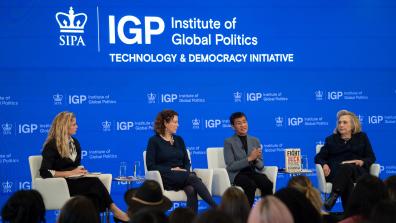
A panel that included Ressa, Secretary Hillary Rodham Clinton, Camille François, and Raney Aronson-Rath discussed the ties between tech and authoritarianism — and what citizens must do to protect democracy.
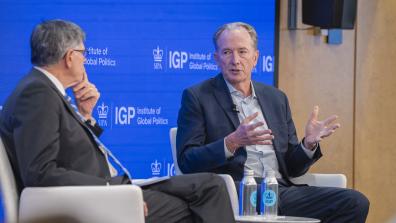
Gorman, a Columbia University Trustee, spoke with SIPA students about responsible leadership during times of crisis
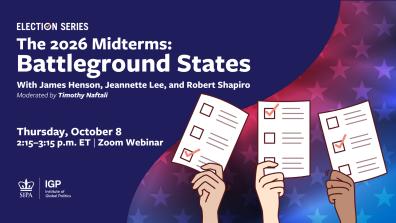
IGP hosted a webinar with political analysts discussing the politics and current trends in key battleground states ahead of the 2026 US midterm elections.

On the third anniversary of October 7, an Israeli and a Palestinian father speak at 92NY about grief, anger, and hope for a better future together.
IGP Cofounders Secretary Hillary Rodham Clinton and SIPA Dean Keren Yarhi-Milo welcome the new cohort of IGP Student Scholars.