
News and Event Highlights
News and Event Highlights
Through research, expert engagement, and public events, the CSIS Commission on US Cyber Force Generation has produced a report on key findings and recommendations on force structure, recruitment, training, retention, and operational integration. The report provides policymakers with a practical roadmap for strengthening US cyber capabilities and ensuring long-term readiness in a contested domain increasingly central to national security, writes IGP Faculty Member Erica Lonergan.
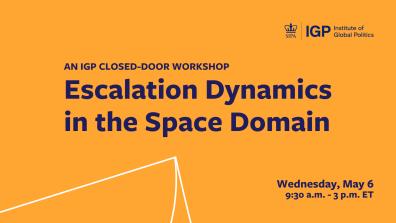
Workshop participants explored the potential causes and pathways of land and space-based scenarios that might trigger a wider crisis in space and how to avoid conflict escalation in this domain.
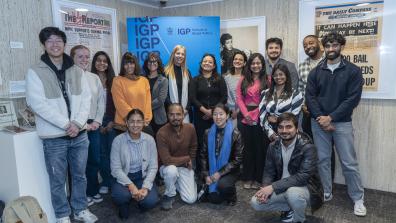
As part of an IGP faculty grant-funded project on the impact of generative AI on democracy, Tamar Mitts and Rumela Sen hosted a workshop centered on comparative approaches to AI regulation, with a focus on India’s evolving regulatory framework.

Public discourse about the potential for a new organization, a United States Cyber Force, reflects a growing consensus that significant organizational change is required to meet the US military’s current and future challenges in cyberspace, write IGP Emerging Technologies, Intelligence, and Security Initiative Cofounder Erica Lonergan and coauthors. If the US does not get organizational culture "right," no amount of organizational change will be effective in addressing its force generation challenges.
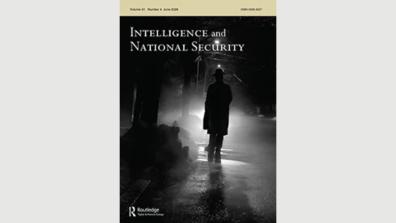
Artificial intelligence (AI) is transforming the speed and scale at which intelligence organizations collect, analyze, and disseminate information. In turn, some are optimistic that AI will reduce the risks of intelligence failures. To evaluate this claim, this article by IGP Emerging Technologies, Intelligence, and Security Initiative Cofounder Erica Lonergan puts AI debates in conversation with the literature on intelligence failures and strategic surprise.
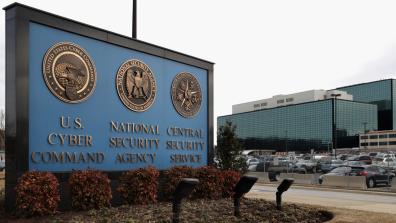
IGP Affiliated Faculty Members Jason Healey and Erica Lonergan comment on the Trump administration's firing of Gen. Timothy Haugh, commander of US Cyber Command and director of the National Security Agency.
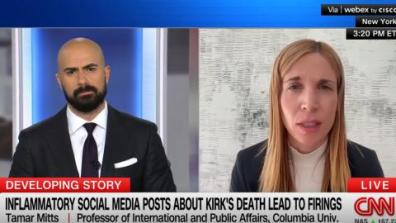
"The inconsistency [in content moderation] is really powerful for actors who wish to promote extremism on social media. That allows them to find people who may be attracted to the ideologies and recruit them on less moderated spaces," said IGP Affiliated Faculty member Tamar Mitts on CNN.
Erica Lonergan, assistant professor of international and public affairs at Columbia University’s School of International and Public Affairs (SIPA), and Rear Admiral (ret.) Mark Montgomery assert the need to establish a dedicated US Cyber Force as an independent military service branch.

The Institute for Global Politics (IGP) at Columbia University’s School of International and Public Affairs (SIPA) convened an intimate group of leading experts for a closed-door convening to tackle cutting-edge academic and policy questions regarding the implications of Artificial Intelligence (AI) for strategy and grand strategy.
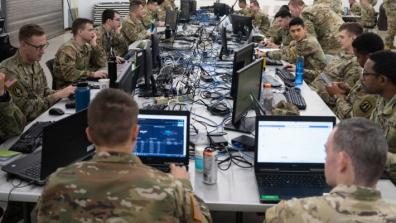
Why did the US Army decide to create a new basic branch for cyberspace? In this article, we explore the causes, processes, and outcomes of cultural change within the Army in a cyber context. Our findings suggest broader implications for military cyber organization and strategy.