
News and Event Highlights
News and Event Highlights

SIPA professor and former Philadelphia mayor visited this Philly-based podcast to talk about his life and career, from childhood to the present day, and more.

To defend America against those who would exploit our social disconnection, writes Hillary Rodham Clinton, we need to rebuild our communities.
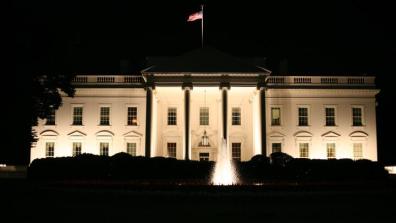
Republicans should stop holding America’s credit hostage, shoulder their responsibilities as leaders and raise the debt ceiling, Hillary Rodham Clinton writes.
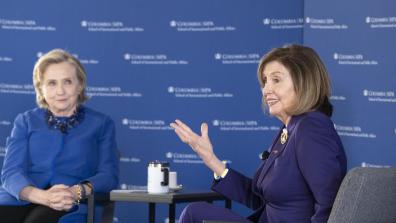
The conversation is the first event in the new SIPA Spotlight series.

Cyberspace's role in military power is vociferously debated. But how do these ideas manifest in cyber strategy? In this article, IGP Emerging Technologies, Intelligence, and Security Initiative Cofounder Erica Lonergan and coauthor Jacquelyn Schneider trace the development of ideas about military cyber power, with a focus on the US.
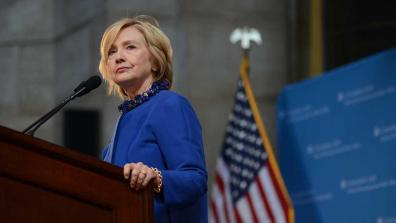
SIPA welcomes former U.S. secretary of state, U.S. senator from New York, and First Lady of the United States on February 1, 2023.

Social media is frequently an arena of intense competition among major political actors across the world. In this article, IGP Emerging Technologies, Intelligence, and Security Initiative Cofounder Tamar Mitts and coauthors argue that a fruitful way of understanding this competition is as coalitions among key actors and their networks of followers, mapping out networks of narrative alignment and conflict on Pakistani social media and providing important insights into the relationships among the major political parties, military, media, and dissidents. Future research can fruitfully explore the causes and effects of powerful social media coalitions.
Signaling is a core element of international crisis bargaining and coercive diplomacy. In this article, IGP Emerging Technologies, Intelligence, and Security Initiative Cofounder Erica Lonergan and coauthor Shawn W. Lonergan develop a theory of signaling in cyberspace, arguing that, although cyber operations are not particularly well suited as costly signals of resolve or capabilities in the context of coercive diplomacy, they have a distinct utility for signaling to manage escalation risks.
Over the past decade, a large number of extremist and hate groups have turned to internet platforms to inspire mass violence. Currently, there is little reliable evidence on how such campaigns radicalize targeted audiences, write IGP Emerging Technologies, Intelligence, and Security Initiative Cofounder Tamar Mitts and coauthors.

What explains online radicalization and support for ISIS in the West? Over the past few years, thousands of individuals have radicalized by consuming extremist content online, many of whom eventually traveled overseas to join the Islamic State. This study by IGP Emerging Technologies, Intelligence, and Security Initiative Cofounder Tamar Mitts examines whether anti-Muslim hostility might drive pro-ISIS radicalization in Western Europe.