
News and Event Highlights
News and Event Highlights

IGP Affiliated Faculty member Anya Schiffrin interviews NYU professor Rodney Benson, author of How Media Ownership Matters.
"AI companies steal quality news from media companies — they should be forced to pay," writes IGP Affiliated Faculty member Anya Schiffrin
The new initiative will produce original research and facilitate high-level dialogues on American democracy at a moment of unprecedented challenges.
“Last week's much-hyped Trump–Putin summit ended in a cloud of deliberate vagueness: no communiqué, no substantive briefing, no clear commitments. Monday's meeting in the White House with President Volodymyr Zelensky, along with some of our most powerful European leaders, was far more promising, but time will tell if peace between Russia and Ukraine is possible in the near future,” writes IGP Affiliated Faculty Member Irwin Redlener.
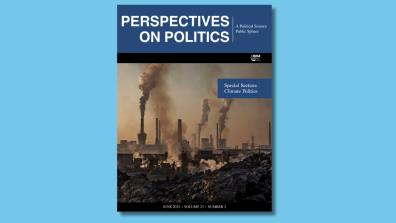
In this piece for Perspectives on Politics, IGP American Democracy Initiative leader Alexander Hertel-Fernandez aims to open the “black box” of how federal policy makers use political science research.

IGP Carnegie Distinguished Fellow Wally Adeyemo writes: "It is not too late to seize the reins of the next great economic reordering and steer the world economy toward a system that lives up to the promise of free trade."

IGP Affiliated Faculty Member Ester Fuchs, professor of public policy and political science at Columbia University, breaks down what the national Democratic Party can learn from Mamdani's success in New York City, as well as how four candidates running as independents could affect the outcome of this race.
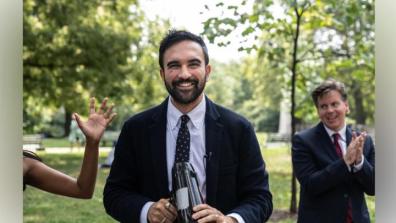
IGP Affiliated Faculty Member Robert Y. Shapiro told Newsweek: "Based on this poll and other polling data, no single candidate could simply catch up to Mamdani."
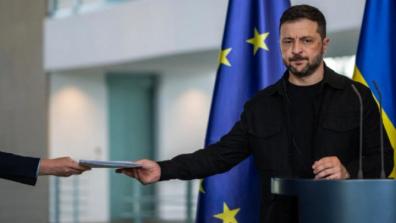
“Some of Ukraine’s strongest defensive positions are in Donetsk, and ceding those defenses would position Russia to reattack in the future from a much more advantageous position,” said Columbia SIPA Senior Research Scholar David Shimer, who led Ukraine policy on the White House National Security Council during the Biden administration. Ceding the region, he said, would be a “massive concession.”
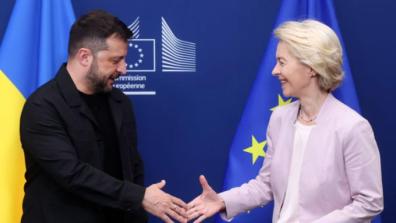
"A total withdrawal from Donetsk would create vulnerabilities for Ukraine militarily because some of its most robust defenses are there, former U.S. officials and experts say. “Ceding those defenses would position Russia to reattack in the future with more of an advantage,” said Columbia SIPA Senior Research Scholar David Shimer, a former National Security Council official during the Biden administration.