Image
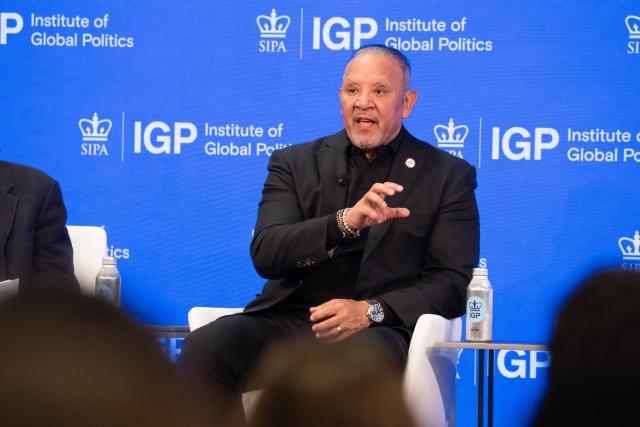

President Donald Trump’s “One Big Beautiful Bill Act” (OBBBA) enacted the largest cuts to social safety net programs in US history, slashing more than $1 trillion in federal funding for Medicaid, the Supplemental Nutrition Assistance Program (SNAP), and student loan services. As the legislation pushes the financial burden of helping Americans meet their basic needs onto state and local governments, cities across the country are struggling to absorb the economic shock.
A panel of policy experts, economists, and civic leaders, hosted by Columbia University’s Institute of Global Politics (IGP) on October 29, detailed how President Trump’s bill and broader federal budget cuts will profoundly affect municipalities’ capacity to provide essential social services. With less federal support for key healthcare, food assistance, and housing programs, local leaders are in a precarious position as they grapple with rising needs in their communities.
Former New Orleans Mayor Mark Morial called OBBBA a “massive wealth transfer” that dismantles decades of economic progress. “The fiscal and moral bankruptcy of the plan,” he said, “is that it cut Medicaid and SNAP, eliminated the Community Development Block Grant (CDBG) program, and moved billions of dollars from programs that impact the most vulnerable Americans over to a domestic police force called ICE, an increased military, and the wealthiest of Americans.”
The longest government shutdown in US history only exacerbated the impact of the cuts to critical nutrition, health, and childcare programs. Several services and benefits that support low-income individuals were disrupted or halted after the government was shuttered on October 1. The Trump administration sought to withhold full SNAP payments as nearly 42 million Americans depend on food stamps, hundreds of Head Start centers across the country face closure due to funding lapses, and millions of Affordable Care Act (ACA) enrollees brace for a spike in 2026 health insurance premiums.
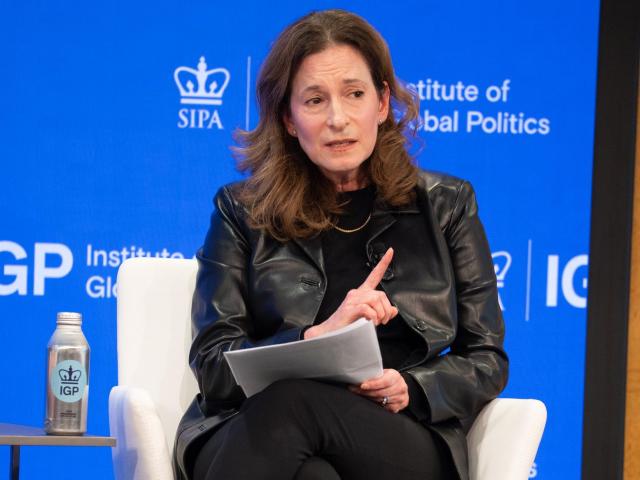
As cities and states with already-strained budgets contend with these mounting pressures, local policymakers will have to make difficult choices about which services to preserve and which to cut. “States and cities will be forced to fill the gaps left by these draconian cuts to vital programs, and in many, if not all, places, it’s impossible to do so because they just don’t have the funds,” said Jennifer Klein, director of the IGP Women’s Initiative and professor of professional practice at SIPA. Klein formerly served as director of the White House Gender Policy Council during the Biden administration.
Few places feel those fiscal challenges more acutely than New York City, where panelists warned that the loss of federal aid could derail efforts to expand affordable housing, sustain public hospitals, and keep food assistance programs afloat. Former US Secretary of the Treasury and IGP Faculty Policy Director Jack Lew explained that the cuts will create a chain reaction of fiscal trade-offs for state and local governments.
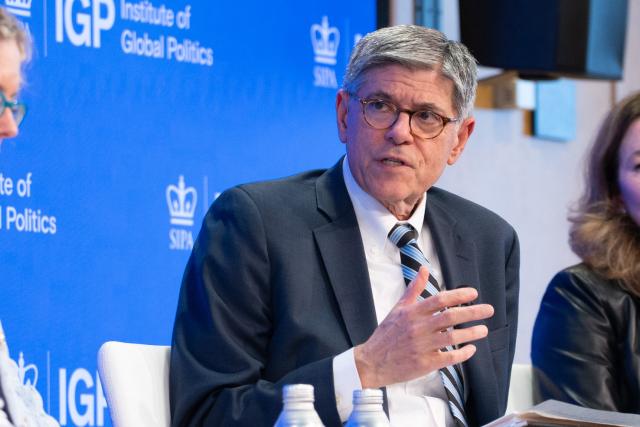
“It’s a little bit like squeezing water from one side of a balloon to the other,” Lew said, emphasizing that efforts to offset cuts to healthcare and nutrition programs would drain resources from other essential services such as education, public safety, and child care. Speaking about New York City, Lew highlighted the need to generate new revenue, but cautioned against exhausting state rainy day funds or raising taxes, saying the city’s tax base is not limitless and excessive hikes risk driving out businesses and individuals critical to the local economy.
The panelists stressed that the federal cuts would disproportionately impact women, families, and people of color. Women make up 57 percent of adult Medicaid beneficiaries and the majority of Medicaid enrollees receiving home and community-based care, while also making up 63 percent of adult SNAP beneficiaries, Klein noted. Morial was clear that the cuts to Medicaid, SNAP, and essential housing programs like Section 8 would destabilize Black and Latino families already facing economic hardship. “We already see, with 300,000 Black women being laid off in March of this year, and the Black unemployment rate rising almost two percent in less than eight months, the beginning of the impact,” Morial said, urging close monitoring of these disparities.
The conversation later turned to the major policy challenges facing New York City’s new mayor-elect, Zohran Mamdani. Panelists explored what kind of policy agenda can make New York more affordable and equitable, and addressed the urgent problems of food insecurity, affordable housing, and the cost of childcare.

Rafael Cestero, CEO of the Community Preservation Corporation, argued that the city’s housing affordability crisis stems from decades of undersupply, resulting in a severe shortage of units at every income level. “At the end of the day, the math of affordable housing and the math of housing development in New York City is cruel – the math is brutal for tenants, brutal for developers, and brutal for owners of existing buildings,” he said. Cestero called for a culture shift from the city’s next mayor that would make New York “open for business” on new residential development.
Jennifer Jones Austin, CEO of the Federation of Protestant Welfare Agencies, detailed how costs for child care, housing, health, and transportation have soared, while wages for low- and middle-income workers have stagnated. “We talk so much about income,” she said, “but people who are thriving have a modicum of wealth. What’s needed is not just affordability policies, but policies that foster genuine economic security.”
Jones Austin, who designed the universal pre-kindergarten childcare programs for former New York City Mayors Michael Bloomberg and Bill de Blasio, cautioned that while universal childcare is an appealing goal, it is imperative not to take a blanket approach. She advocated tying support to measures of economic insecurity. “If you do the same for child care as we did for universal pre-kindergarten, you actually have the challenge of probably growing the wealth gap, because people who don't need $20,000 or $25,000 in childcare now get a boost in their discretionary income to actually maybe push the housing market up in terms of cost of housing,” she said.
Throughout the discussion, the conversation repeatedly circled back to the interconnected nature of affordability: families unable to afford child care are also squeezed on rent, health costs, and transportation. Jones Austin explained that a holistic approach is required – one that doesn’t just offer single-issue fixes, but recognizes how fiscal pressures cascade across a household’s needs.
Panelists agreed that with the safety net shrinking and costs on the rise, the city’s way forward will require innovative local leadership and a willingness to rethink how the city supports and invests in its most vulnerable residents. As Jones Austin put it, “The next mayor needs to focus on how he can unify New York City and help us appreciate that the affordability crisis is everybody’s crisis.”