Image
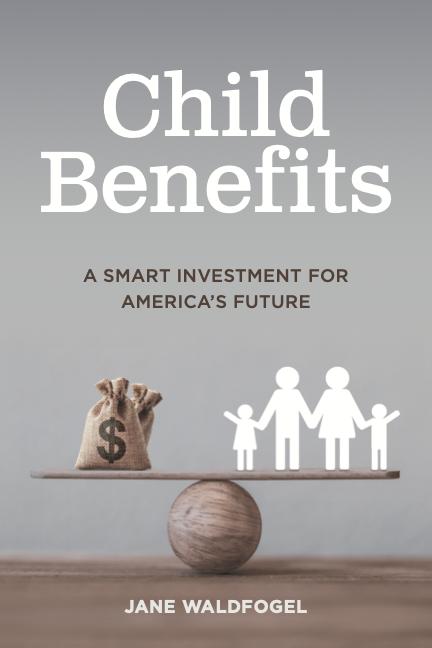
Author Jane Waldfogel debuted her new book, Child Benefits: A Smart Investment for America’s Future, at the Columbia School of Social Work on June 5. Waldfogel, the Compton Foundation Centennial Professor for the Prevention of Children’s and Youth Problems at the School of Social Work and an IGP Affiliated Faculty member, discussed the potential of child benefits as a transformative social policy. She was joined by Megan Curran, policy director at Columbia’s Center on Poverty and Social Policy, which hosted the event in collaboration with the Columbia Population Research Center, Columbia School of Social Work, and the Institute of Global Politics’ Women’s Initiative.
In Child Benefits, Waldfogel examines why the United States has one of the highest rates of child poverty among developed nations and remains the only high-income country to not offer child benefits. As the US has moved towards a child benefit over the last several years, Waldfogel said she was motivated to write a book that would “bring together the evidence” on the issue and be available to policymakers.
At the book launch, Waldfogel and Curran discussed the history and impacts of child benefits around the world, the major proposals under debate, and recommendations for a permanent child benefit policy in the US. Waldfogel’s research traces the origins of child benefits back over 100 years, detailing how they began in Belgium and France as employer-sponsored family allowances. Today, two-thirds of countries worldwide have implemented some form of child benefit, leaving the US – one of the wealthiest countries – as a notable outlier.
In the US, the current Child Tax Credit falls short of a true child benefit, Waldfogel explained, noting that it only serves families who meet its earnings requirement. "If we extended it to all families with children, if we delivered it monthly, if we decoupled it from employment and earnings, then that would be a child benefit," she said.
While many assume that the $2,000 per child credit is universally accessible, the reality is far different. Waldfogel highlighted that one in four children do not receive the full $2,000 benefit. “And astonishingly, the children who aren’t getting it are the lowest income children,” she said. This stands in sharp contrast to other developed countries that prioritize supporting families across income levels.
Waldfogel’s research challenges long-held misconceptions about direct cash support to families with children. Analyzing studies from 38 OECD countries, her work presented a consistent narrative about how families use additional financial support. She noted that across studies, "parents predominantly spend child benefits on essential needs: children’s clothing, books, toys, footwear, musical instruments, education materials, and family necessities like housing and transportation." Her research found no increase in spending on alcohol or tobacco – in fact, some evidence suggests such spending may decrease when families experience reduced financial stress.
Waldfogel explained that the 2021 temporary expansion of the Child Tax Credit provided an opportunity to study the impact of a more generous, monthly child benefit in the US. This expansion, which more closely resembled a true child benefit, offered important insights. Families used the additional support for critical needs such as childcare, after school care, and household necessities, Waldfogel noted, “with food often being the first priority” – a stark reminder of the economic challenges facing many American families. Waldfogel emphasized that middle-income families, not just low-income households, benefited from the additional support, highlighting the broad economic impact of such policies.
Congress failed to make the 2021 expansion permanent by just one vote, which Waldfogel described as "a sad moment."
Waldfogel and Curran discussed the history of the Child Tax Credit, which was first proposed by Republican Speaker of the House Newt Gingrich in 1994 at $400 per child. “What strikes me about the history of the child tax credit is that it's been progressively expanded over the course of the last 30 years, but also how bipartisan it's been,” said Waldfogel. The Trump administration increased the value to $2,000 per child, and congressional debates continue about potentially raising the credit to $2,500 per child.
Curran stressed the importance of understanding how social policy decisions impact families, and highlighted the central message of Waldfogel’s book: supporting families is not just a moral imperative, but a strategic investment in the country’s future.