Image
If 2023 was the year generative AI went mainstream, 2025 may be remembered as the year its byproducts flooded the internet. Online users have encountered a steady stream of synthetic media across all platforms: looping meme genres like “Italian brainrot,” AI-generated historical reenactments, and faceless influencer accounts operating at scale. Collectively, this content has come to be labeled “AI slop,” a term that captures both its perceived low quality and its overwhelming volume (and was also Merriam-Webster’s 2025 word of the year). But the term risks understating the phenomenon because what is often dismissed as disposable or absurd content is, in practice, the visible surface of a deeper shift in how digital media is produced, distributed, and consumed.
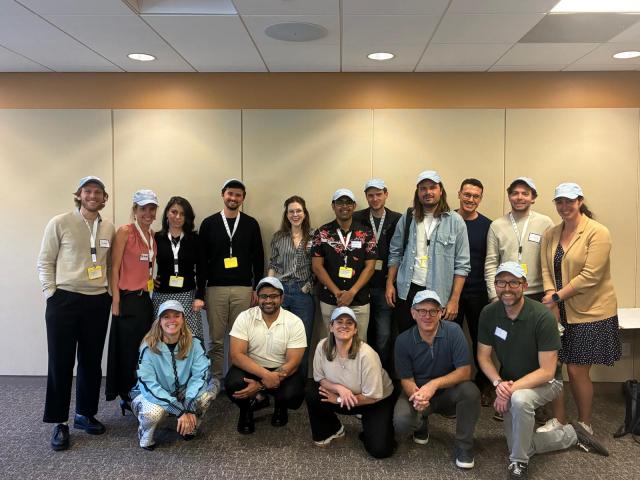
To clarify the stakes and illuminate concrete paths forward, Columbia University’s School of International and Public Affairs’ Institute for Global Politics (IGP) and the Hewlett Foundation recently convened the Slop Salon, bringing together an interdisciplinary group of researchers, investigative journalists, technologists, and platform representatives to explore the boundaries and implications of AI slop. Despite the catchy term’s growing popularity, its definition and scope remain contested. Is “slop” best understood as a content category, an aesthetic, or a systemic outcome of platform incentives?
Workshop participants converged on the idea that AI slop is not just a single or static content type, but rather it exists on a spectrum and is inseparable from its situating context. Its definitional traits converge at the intersection of low quality, mass scale, and varying creator intent, with complex interactions among these dimensions. Participants critiqued the term AI slop itself as an often counterproductive phrase that complicates more than it clarifies. The conversation further examined slop’s supply and demand dynamics, broader information-systems mechanics, and impact on different types of platforms. While participants agreed that slop resists a precise definition, they aligned on its significance: it both reflects underlying transformations in the information ecosystem and contributes to a growing set of systemic risks.
Before the workshop, Columbia researchers compiled an AI slop backgrounder that included a literature review and insights from eleven interviews with people across disciplines working on aspects of slop. We will publish this paper and the day’s outcomes as collective proceedings, including a research agenda, in the coming weeks. A summarized readout of the day is provided below.
The day was punctuated by a series of provocations from experts who study slop from different perspectives spanning academic research, investigative journalism, and Internet cultural critiques:
Researcher Eryk Salvaggio of the University of Cambridge framed slop as content with a specific aesthetic that has an immediate impact but doesn’t merit sustained attention, leaving viewers with a faint uncanny or hollow aftertaste. Salvaggio argued that slop is both a systemic output and predictable result of current information systems design, cautioning we may be entering an age of “noise” rather than information, where meaningful content gets diluted due to the sheer volume of visual digital clutter. He presented the rise of AI slop as a predictable outcome of any system that combines automation with engagement incentives, and posed some core questions for the room to explore. The first question considered how to differentiate between the AI slop that acts as “noise” (low-quality, mass-produced, overly-abundant synthetic content that solicits clicks but little else) and slop that causes harm, either directly or indirectly. Secondly, he noted that AI slop arises not only from volume, but from how algorithms filter and rank content; these algorithmic systems also often reflect business priorities, such as engagement, rather than neutral technical processes. Lastly, Salvaggio cautioned that information exhaustion itself may be weaponizable, as users’ interest and ability to discern fact from fiction are being worn down in real time.
Investigative journalist Jason Koebler, of the independent technology media company 404 Media, highlighted the economic drivers underpinning AI slop. His reporting suggests that much of this content is produced not for deception, but for monetization, and powered by low-cost courses provided by online influencers and tutors teaching viral content strategies. This empowers entire industries – ranging from pornography to influencer economies – to industrialize content production on a global scale. Koebler’s research also described how “hustle bros” actively recruit and train new entrants to capture value from Western, and especially US, attention markets in order to profit from their relatively lucrative advertisement ecosystems. This dynamic raises broader questions about how global content production pipelines are reshaping information ecosystems, where what we see online may be less a reflection of relevance or truth, and more the outcome of systems optimized for scale, engagement, and profit.
Renée DiResta, a researcher with Georgetown University’s McCourt School of Public Policy, argued that AI slop serves as an enabler that can obscure more insidious forms of abuse perpetrated by bad actors. Using a January 2026 example of a manipulated White House image that served to darken a Black woman’s skin and edited in tears that did not exist in real life, DiResta showed how the normalization of meme-like AI content can create plausible deniability and “cover” for varying deceptive, targeted, and ultimately harmful behaviors. Exploring the intersection of slop and adversarial abuse can sharpen our understanding of where slop begins and ends, and she encouraged participants to keep in mind that bad taste is not bad faith; synthetic does not mean deceptive; and low-quality does not necessarily mean low harm. DiResta also proposed several observable dimensions to help distinguish benign slop from harmful slop, like specificity and whether content prompts action, emphasizing that intent, behavior, and deployment matter more than whether it is AI-generated. She also highlighted factors such as mechanisms of deception, and delivery methods (mass vs. personalized), asking whether AI slop is truly novel or simply a cheaper version of what came before.
Sourojit Ghosh of the University of Washington gave a provocation focused on AI slop’s role in meaning-making and its impact, rather than its production method alone. He shared research from his lab at UW, led by Nina Lutz, indicating that in some instances, even when users know slop content is AI-generated, it can still land emotionally and feel meaningful, raising questions about what “harm” and “benefit” mean in relation to slop. The room grappled with questions around whether it is possible for “socially beneficial” slop to exist – and if so, who decides, and what criteria and processes should be established to determine the social utility of AI slop? Ghosh underscored the need to quantify the effects of AI slop on different populations, particularly among diverse populations with varying levels of AI literacy.
Content creator and internet culture researcher Aidan Walker, who is new media manager at the Carnegie Endowment for Peace, argued that AI slop is best understood as the conjuncture of mutually reinforcing trends: cheap generative tools, institutional decay, algorithms that prioritize specific forms of engagement over others, and the eccentric ways money moves around the online ecosystem – whether through platform monetization programs or the venture capital rounds that fund AI companies. His central analogy was that AI slop is like McDonald’s Chicken McNuggets: cheap, widely available, enjoyed by many, and often serving real social functions. Like McDonald’s, which serves as a de facto community center in many places and as a source of cheap, fast, and genuinely tasty nutrition, slop can and does act as infrastructure, enabling participation and filling gaps in online content economies for “good enough” intellectual, humorous, and/or emotionally resonant content. He argued that AI slop is fundamentally contingent on the environment and context which creates opportunities (or demand) for slop creation, both online and within society more broadly. From his perspective, there is no canonical format or genre of AI slop, just the forms of slop that emerge out of a complex set of circumstances at a given time.
The Slop Salon focused on developing a structured framework and series of breakout sections to identify the boundaries of the hard-to-understand phenomenon. Participants converged on a set of core dimensions – quality, scale, intent, deception, harm, and context/consent – as analytic lenses, while recognizing that none are independently sufficient. This led to a set of guiding inquiries, where participants were first asked to identify where slop actually happens, among which technology providers, and who or what was most impacted by it. At the same time, another set of participants focused on how and in which circumstances AI slop as a phenomenon was genuinely novel and new, versus where it was merely a continuation of the existing trends across the information ecosystem.
These areas of inquiry gave solid groundings for our group of information ecosystem experts to then spend the rest of the afternoon mapping three central characteristics of AI slop. The different groups focused on (1) creating clear categories of impacts, harms, and potential uses of AI slop, (2) mapping the primary and secondary impacts, differentiating between acute and diffuse effects at the individual and institutional levels, and (3) understanding the economic dynamics and motivations of AI slop generation, distribution, and consumption. From these discussions, participants also drafted a series of research questions to steer future endeavors in academia and industry. Participants discovered many avenues for collaborations – from workshops to research and archival work – with the goal of informing policymakers and practitioners going forward.
The Slop Salon’s discussions and research priorities that they identified underscored the need for cross-disciplinary approaches in understanding and scoping the challenges of rapidly proliferating AI-generated content (not just slop!) within our collective information ecosystem. Rather than converging on a single definition or set of characteristics, the workshop surfaced a range of perspectives, tensions, and open questions on how AI slop is produced, distributed, experienced, and governed across contexts. Participants roundly emphasized the importance of moving beyond debates dominated by one lens alone (platform, policy, technical, etc.) and instead incorporating insights from academic researchers, journalists, practitioners, platforms, and those grappling with these dynamics in real time.
We are deeply grateful to the participants and provocateurs of the Slop Salon for bringing intellectual generosity, rigor, candor, and humor to the discussion. A full list of participants and provocateurs is included below: